










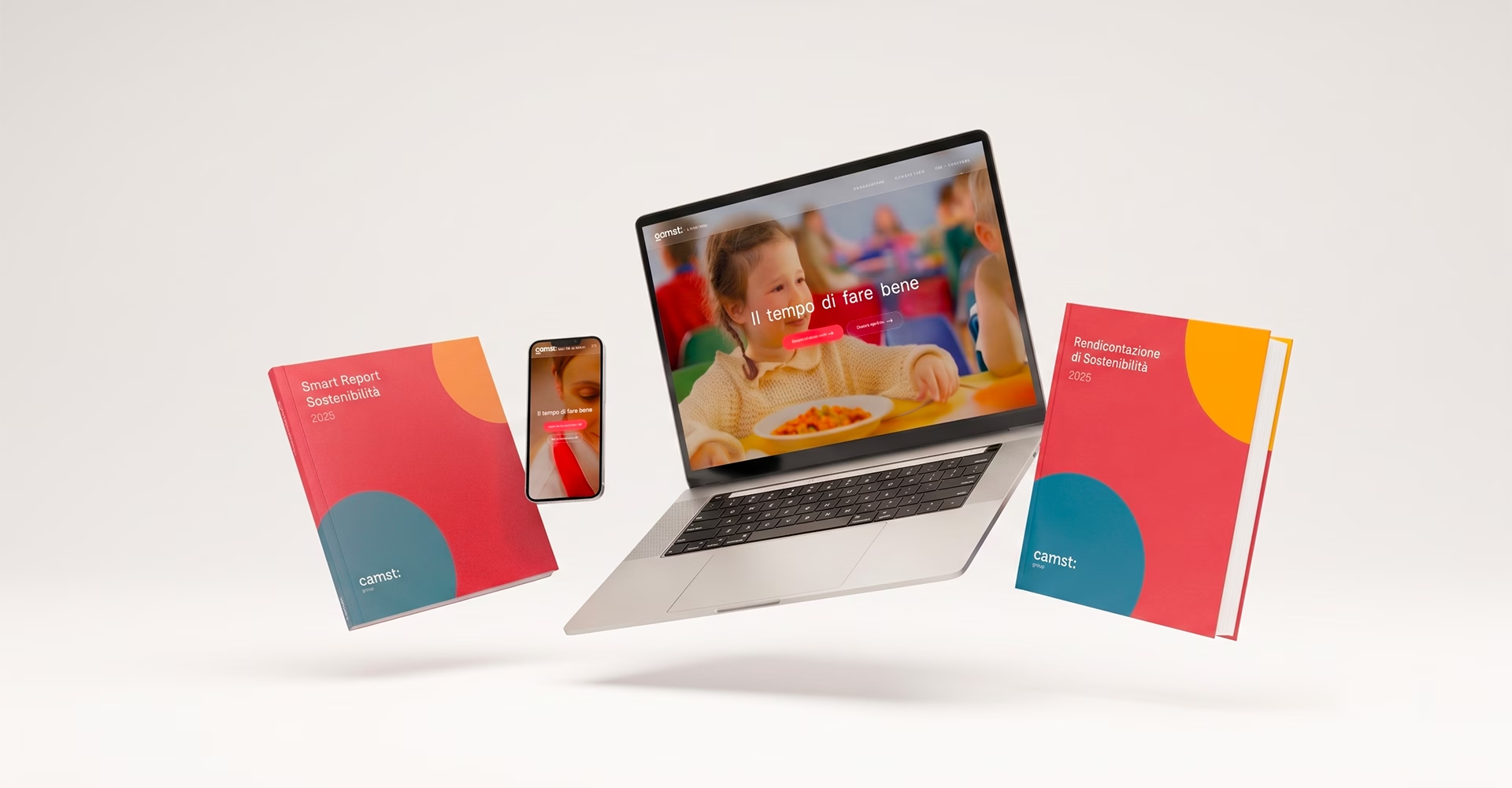
Telling the story of social and environmental commitment is first and foremost a journey of clarity and transparency. In recent years the way sustainability is communicated has changed profoundly, driven in part by an increasingly rigorous European regulatory framework: stakeholders, clients and communities are asking for reliable references that offer genuine awareness of the actions taken.
In this scenario, communicating your impact means, even more than before, putting forward a rigorous account of the results achieved, starting from the data.
Green claims and the ECGT Directive: what changes with the new rules
This change of perspective finds a decisive turning point in the new European regulatory framework, led by Directive (EU) 2024/825, known as the ECGT Directive (Empowering Consumers for the Green Transition) and transposed in Italy by Legislative Decree no. 30/2026.
The legislation aims to combat greenwashing and protect consumers by introducing stricter criteria for environmental claims. Generic claims not backed by transparent and measurable evidence are no longer allowed, nor is the use of voluntary sustainability labels that are not based on official certification schemes or recognised by public authorities.
The central role of transparent reporting
Structured reporting allows organisations to analyse their impacts, identify areas for improvement and plan long-term goals based on real evidence.
Through clear and standardised reports, reporting builds a bridge of trust with all stakeholders — from clients to employees and local communities — while communication has the task of turning the complexity of technical data into a narrative that is consistent, accessible and continuously verifiable over time.
Camst group’s Sustainability Report: responsibility at the centre
It is precisely in this context of rigour and traceability that Camst group’s 2025 Sustainability Report comes in, documenting a journey in which the economic, social and environmental dimensions continue to be interwoven with the cooperative’s identity as a Benefit Company.
The document confirms the voluntary choice to adopt the European ESRS standards, a methodological reference that makes reporting even more structured and comparable. An approach that refines data collection and strengthens the traceability of information, giving a clear and objective account of strategic choices in the field of sustainability.
A new portal for accessible, shared information
Alongside the publication of the Report, Camst group has redesigned its sustainability website: a digital platform rebuilt to integrate reporting data and make it even easier for all stakeholders to consult.
The new website reorganises the company’s entire journey, highlighting environmental, social and governance (ESG) topics through an intuitive structure and up-to-date content. A portal to consult the 2025 Report, explore individual company projects in detail, track their progress and understand future directions of work, turning the results achieved into an open body of information ready to encourage ongoing dialogue with the community.