



From private homes to food services, reducing waste starts from a single priority: identifying where and why food is thrown away.
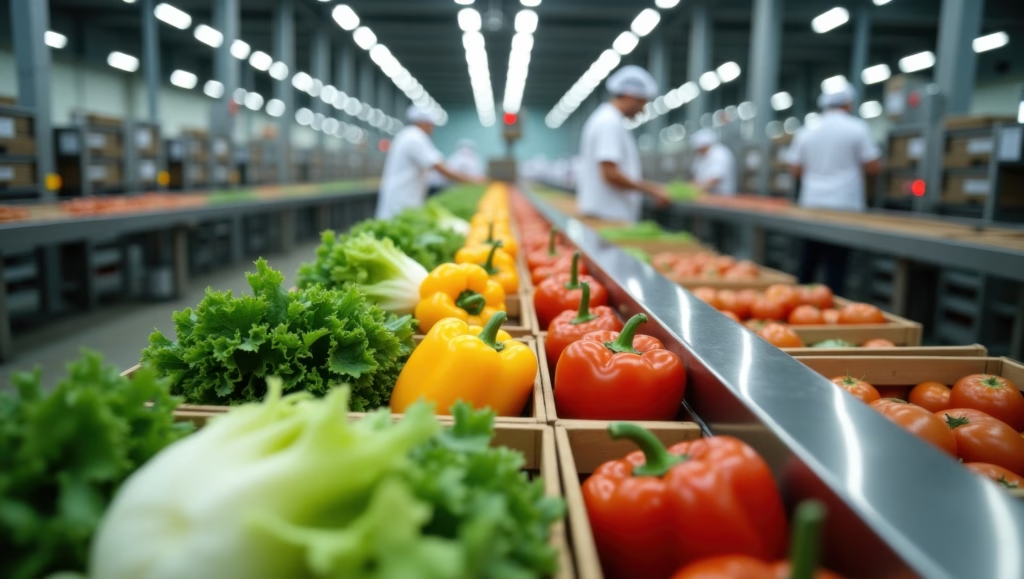
Every food item that is not eaten carries an impact that goes far beyond what is left on the plate. Producing it required water, land, energy, labour and economic resources which, together with the food, risk being lost. Tackling food waste therefore means facing an environmental, social and economic challenge that involves the entire supply chain, from agricultural production to consumers’ everyday habits.
Globally, an amount of food equivalent to around one third of total food production is wasted every year: a phenomenon that contributes significantly to greenhouse gas emissions and to the consumption of natural resources, including the water and farmland used to produce food that will never be eaten.
The situation in Italy
Turning to our own country, the phenomenon shows some positive signs, even though the road to the targets set for 2030 is still long. According to the Cross Country Report 2025 by the Waste Watcher International Observatory, conceived and directed by Prof. Andrea Segrè, each person wastes on average 555.8 grams of food a week: a figure that is down on the previous year and confirms greater attention on the part of households, while remaining higher than in several European countries and still some way from the target set for the end of the decade.
Differences between households and regions also show that waste does not depend on a single cause, but on the interaction of several factors such as the ability to plan shopping, how meals are organised, how food is stored and how much attention is paid to food already in the home. Awareness is therefore growing, but it does not always translate into consistent behaviour, to the point that even those who say they pay attention can end up throwing away products forgotten in the fridge, bought in excessive quantities or not eaten at their best.
Home and food service: a shared responsibility
Most of the waste linked to final consumption happens in the home, where it is mainly fresh and perishable products such as fruit, vegetables and bread that end up in the bin. This is often linked to storage difficulties, overbuying or poor planning, which call above all for better everyday organisation.
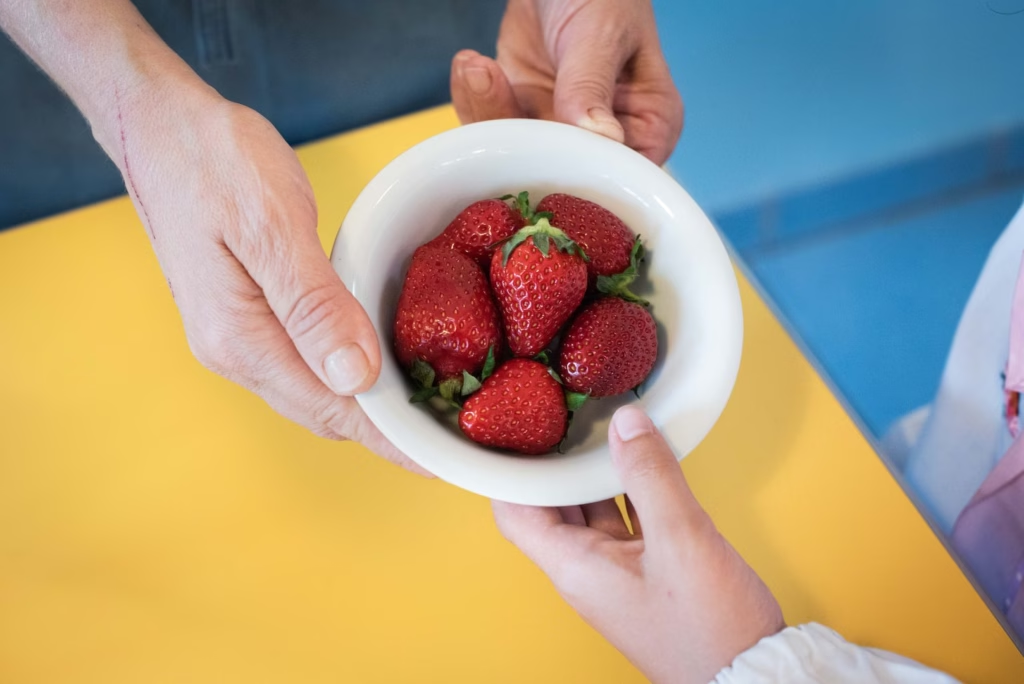
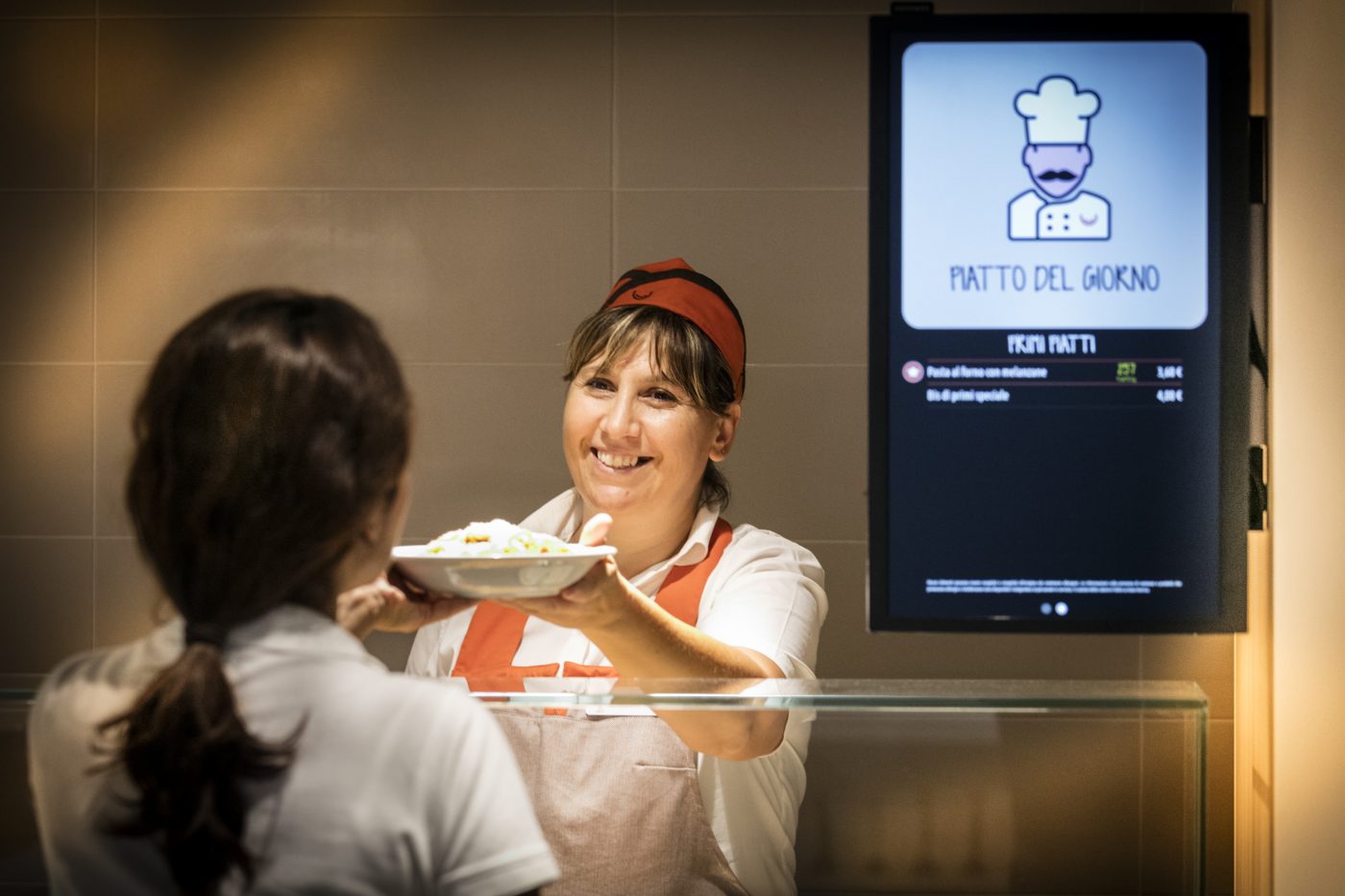
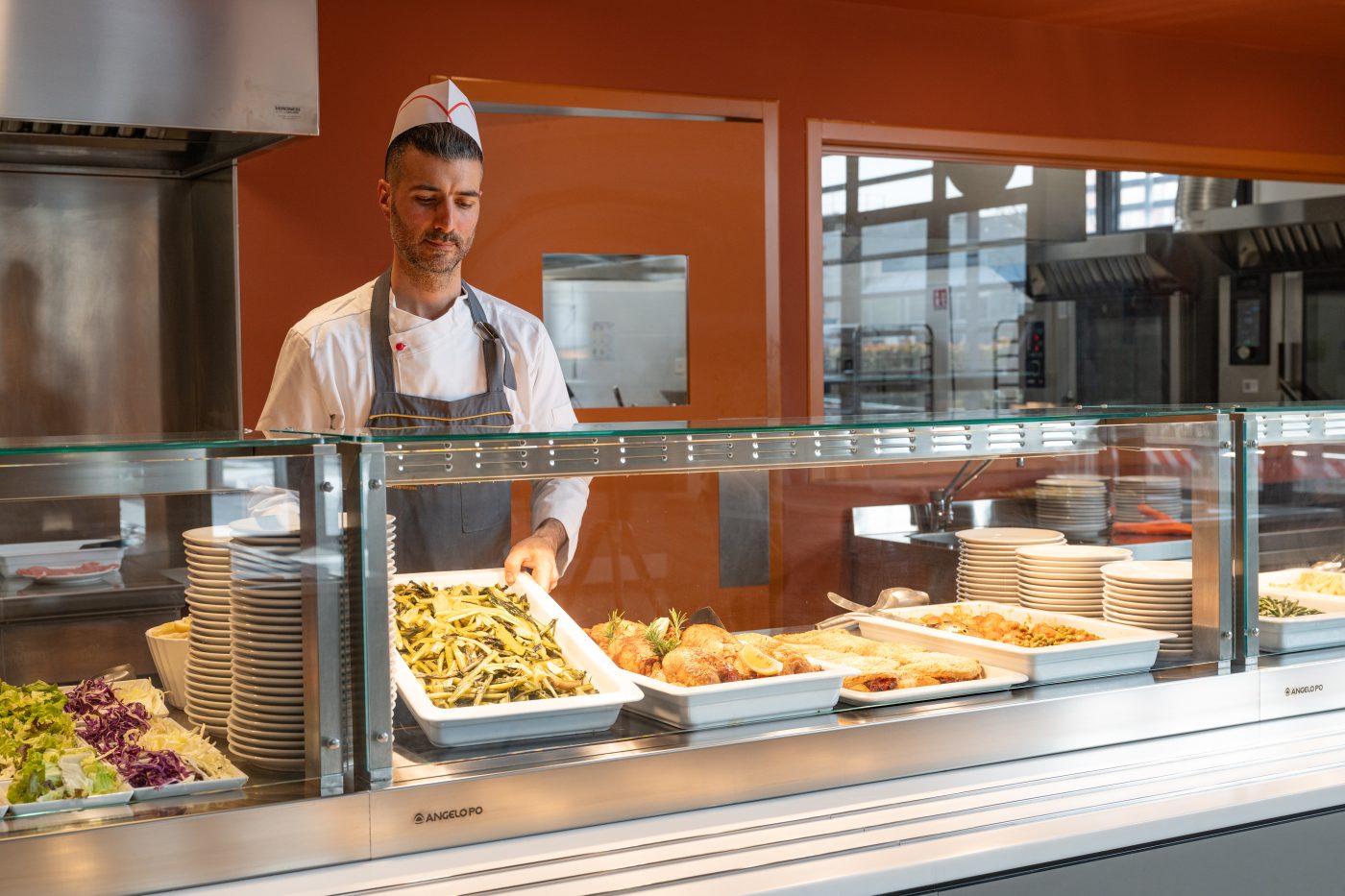
In food service the incidence of waste is lower, but the sector is nonetheless a key area for action. Away from home, both the recovery of what is not eaten — a growing practice, although still held back by customers’ reluctance or staff uncertainty — and prevention at source play a central role. Offering flexible portions, providing containers for leftovers and designing menus that reflect actual consumption are concrete choices that help reduce surpluses and that, in institutional and school catering, also take on a deep educational value.
Camst group’s commitment: measuring to prevent
This is the context for Camst group’s commitment to preventing food waste, developed through its collaboration with Last Minute Market, a social enterprise born as a spin-off of the University of Bologna, and its support for the national Spreco Zero campaign.
Since 2024 the partnership has brought Sprecometro into school catering: thanks to a dedicated section of the app created by Last Minute Market together with the University of Bologna, students and teachers can record the surpluses produced in canteens and understand their effects in terms of CO₂ emissions and natural resource consumption, combining measurement with teaching materials and training paths designed to help children and young people recognise the value of food. In 2025 this approach was also applied at the United World College of the Adriatic in Duino, where the Sprecometro Challenge turned the monitoring of leftovers into a shared challenge between the residences.
For Camst group, tackling food waste means combining innovation, education and everyday responsibility: because it is when a meal becomes an opportunity to observe habits, measure impacts and share solutions that food service can make a concrete contribution to building a more careful and sustainable food culture.