
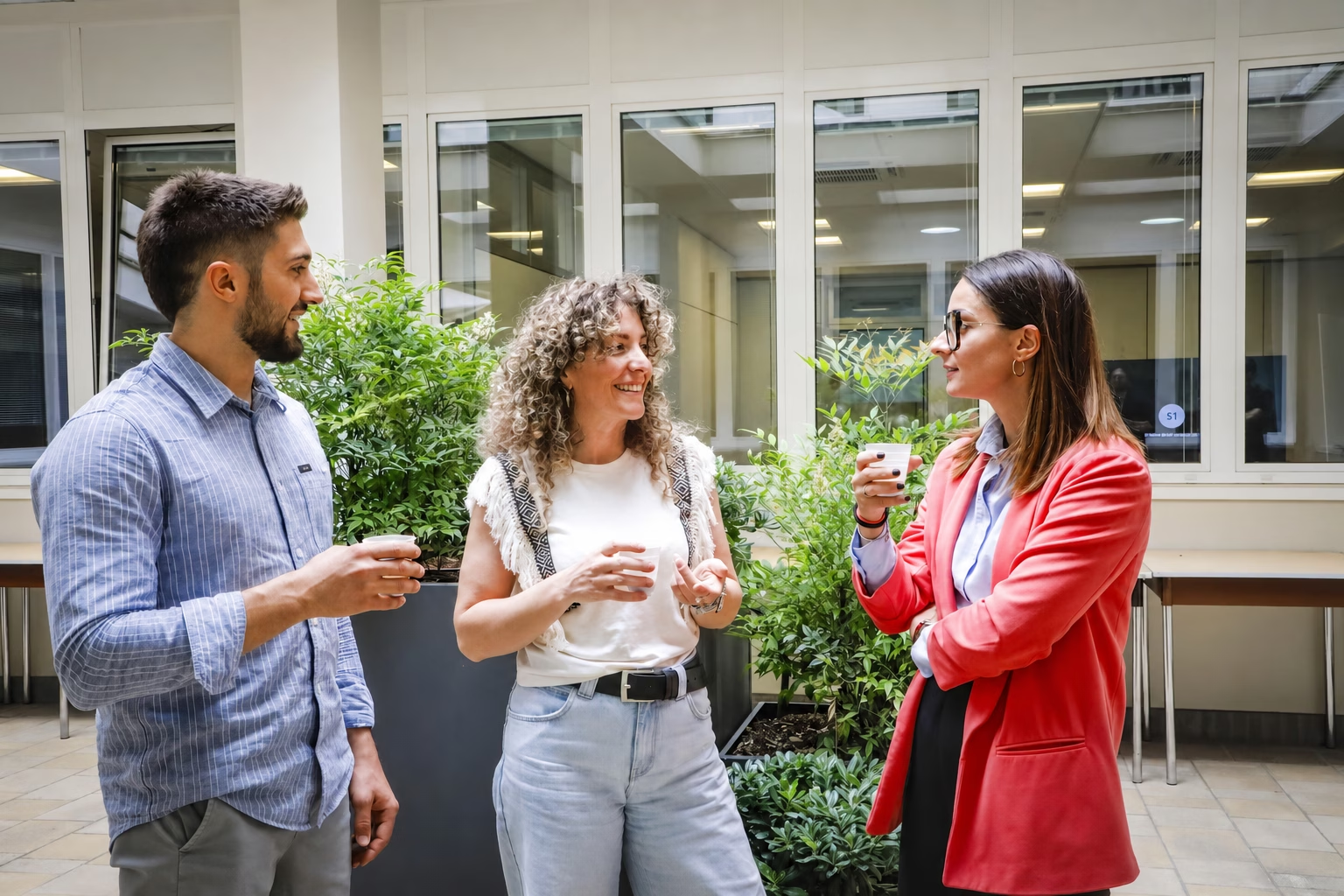
An expert in the circular economy at an organisation that makes sustainability central to its work, Stefano Amaducci tells us about the importance of partnerships when it comes to achieving shared goals. Circular economy, sustainable mobility and separate waste collection are at the heart of the collaboration between Camst group and Gruppo Hera, which has already delivered concrete results.
Stefano Amaducci
Today we are here in Bologna, at Hera’s new headquarters in via Cristina Campo, home to the circular economy unit. This unit develops sustainability and decarbonisation projects and all projects aimed at protecting the environment. In September 2020, Hera and Camst signed a pact – a pact for sustainability.
This pact provides for implementing circular economy, sustainable mobility and environmental communication initiatives, and for improving separate waste collection in Camst stores.
The transition to the circular economy is a challenge, a difficult journey, a cultural leap – even an industrial revolution.
No one can do it alone. You need to build a partnership, you need to build a network, you need to do it together. Why did we choose Camst?
For several reasons. The most important is that we share the same values and the same principles of sustainability. Our local roots should not be overlooked either: we operate in the same areas, so it is easier to create synergies in industrial processes.
Last but not least, I like to point out that we are two long-established companies of this area.
What are used vegetable oils? They are frying oils, the oil in a can of tuna, to give you an idea.
Releasing them into the environment causes a great deal of damage. Hera has created a project to recover these materials, a virtuous circular economy project.
What does it involve?
We collect these oils and take them to primary processing plants where they are brought up to specification – in practice, purified. They are then transferred to Marghera, to Eni’s biorefinery, where biodiesel is produced. This biodiesel has very high-performance qualities.
In 2021 Camst group joined the project with 62 central kitchens and restaurants, which contributed 20 tonnes of used vegetable oil. Once processed, these 20 tonnes produced 22,000 litres of biodiesel. In 2022 Camst group added a further 210 sites to the project, which are expected to contribute another 100 tonnes of used vegetable oil.
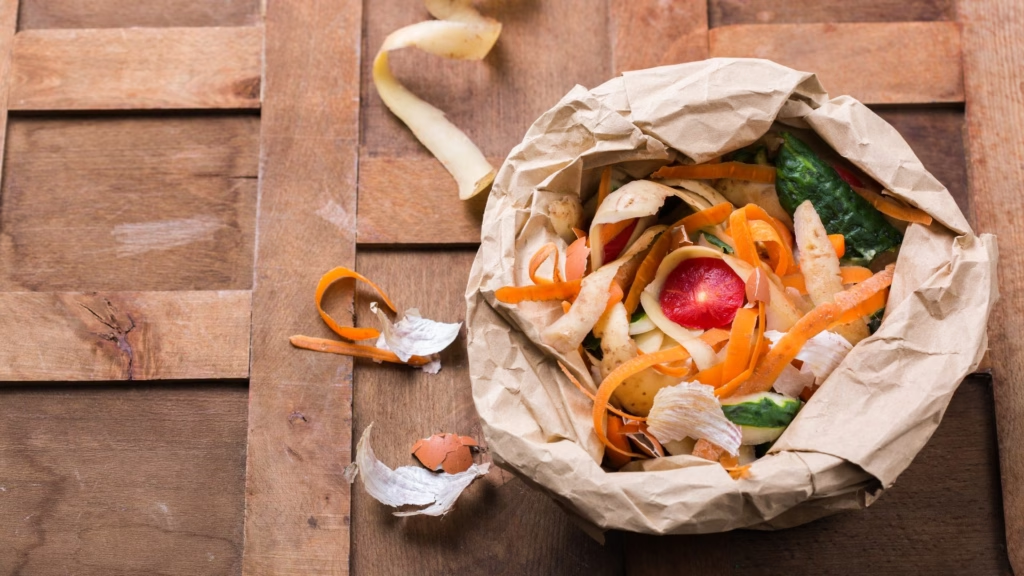
Another important resource recovery project is the recovery of organic waste. By delivering its waste, Camst group helps produce biomethane at Hera’s plant in Sant’Agata Bolognese. This plant treats 100,000 tonnes a year and can produce 8 million cubic metres of methane.
Today Camst group takes part in the project with 7 production centres in the provinces of Bologna and Modena, which generate about 420 tonnes of organic waste a year. These quantities of waste allow us to produce up to 32,000 cubic metres of biomethane.
Just think: this amount can power around twenty mid-size cars travelling almost half a million kilometres a year.
What’s more – and here we are talking about something of truly great value – it contributes to decarbonisation by reducing CO2 emissions by 60 tonnes. I like to point out that this important collaboration with Camst group has involved other Hera group companies, first of all Hera Comm, which has already supplied a number of charging points. And if we consider that through this collaboration we have already produced biodiesel, produced biomethane and installed charging points, we really are on a very significant sustainable mobility journey.
For the future, in addition to consolidating the biodiesel and biomethane projects, we are thinking of implementing circularity and sustainability initiatives that can help both companies reach the decarbonisation goal we are all trying to achieve.