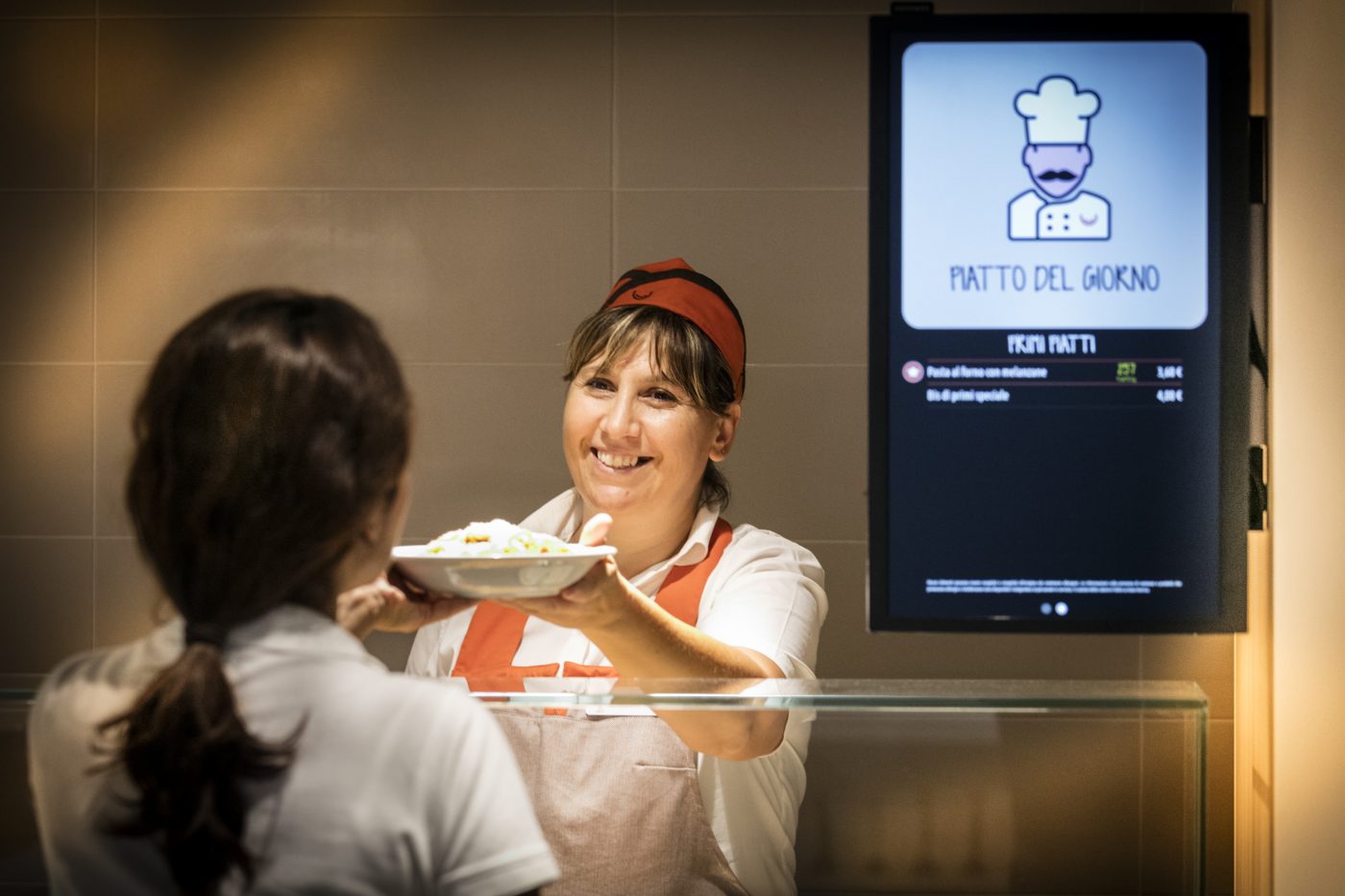

In this episode we talk about Blu Bass’Otto, the initiative that every Friday turns our historic self-service restaurant Bass’Otto into an open and welcoming bar for people with autism spectrum disorder (ASD). A project created together with ANGSA Bologna, the Bologna Local Health Authority (AUSL) and the Municipality of Bologna to provide a safe place where young people can enjoy genuine social moments in a venue in the heart of Emilia-Romagna’s capital.
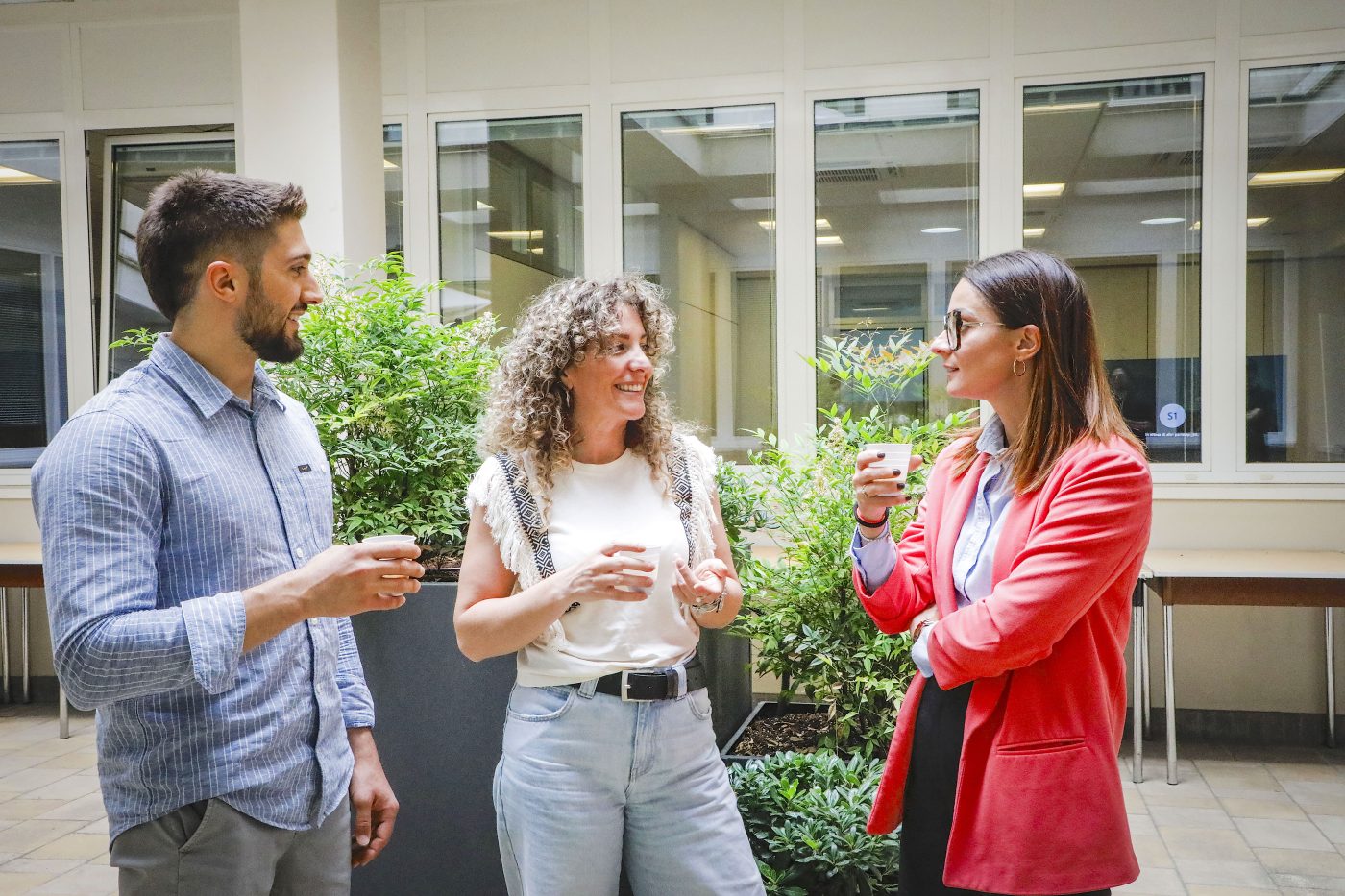
Ilaria Cuseo: Hi Marialba, how lovely to see you here. We’re at the Bassotto, a historic Camst venue in the heart of Bologna. The Bassotto has also become the heart of a project that moves us deeply.
Marialba Corona: The pleasure is mine too. This is a place that feels like home and, above all, it has become a point of reference for so many of our young people.
Ilaria Cuseo: Just think that today, so many years after the Bassotto opened, we can try out new ways of fostering inclusion together. By the way, I can see the project membership card over there that you gave me on the day we launched this series of evenings and presented the project to the press.
Marialba Corona: As you can see, this card is number 79, so we’ve already issued 78 cards. Every evening there are around 30-40 young people playing at the tables, and this card gives them a sense of belonging, of being a group and of being together for these evenings at the Bassotto.
Ilaria Cuseo: In fact I wanted to ask you what impact the project has had so far on families and on the young people. What reactions have you seen?
Marialba Corona: The young people are building real friendships, they arrange to meet from one Friday to the next, and the families are delighted because at last their children don’t shut themselves away in their rooms but go out like everyone else their age, and at the same time the parents have an evening to devote to themselves and to their other children. But will you tell me the history of this place?
Ilaria Cuseo: I don’t think everyone knows that the Bassotto was the first self-service restaurant in Italy. It started out, however, as a people’s canteen, a place where people could have a full meal at moderate, affordable prices. So it is a place born with an identity strongly rooted in the values of integration, inclusion and equity, and it’s wonderful to see that today these values can take concrete shape in a new form through the Blu Bassotto project.
What’s more, as you know very well, the project has become part of a wider programme promoted by the Municipality of Bologna, called Bologna Città Blu.
Marialba Corona: Yes, in Bologna Città Blu, blue is the colour of autism, not everyone knows that, so we called this project Blu Bassotto.
Ilaria Cuseo: Marialba, tell me a bit about what makes these evenings a unique experience for the young people.
Marialba Corona: These evenings were designed down to the last detail by ANGSA and the AUSL. We paid a lot of attention to the sensory aspects, adjusting some lights that were too strong, and we took care of the food, the drinks and the games. That’s why there is a facilitator who does not act as a carer but as an expert in board games. He explains new games to the young people, and they in turn suggest new games to the facilitator, who has to learn them in order to play with them on Fridays.
Every Friday is different. Our project is a co-design effort with many players. There’s the Municipality of Bologna, there’s ANGSA, there’s the AUSL with its integrated disability and health programme, there are the young people and there’s you at canista. How do you see this co-design?
Ilaria Cuseo: As you say, Marialba, the real strength of this project has been the central role of the relationships we managed to build, nurture and develop between all the organisations that took part in turning this idea into something real and substantial. This synergy between them was certainly a key to its success. Everyone contributed their own skills and professional expertise, everyone has their own role, and I think we are working very well together, respecting all the professional skills involved.
And then I certainly believe that another strength, which is a distinctive feature of this project, is the natural bond between Camst and ANGSA. As you know, some of our employees and former employees are members of your association, and this has been a natural bridge between Camst and you.
Marialba Corona: In fact that’s exactly how it started. To carry out all its projects for adults and children, our association needs fundraising, and every year we run Christmas and Easter fundraisers. It was precisely by selling Easter eggs in your canteens that we got to know each other, but above all by talking about autism in your canteens. So many of your employees and many managers became aware of this issue, and we also held meetings with Dr Di Sarro of the Bologna AUSL, initially to see whether there were opportunities for job placements. Then, as we kept talking, the idea of the bar came up and we said: let’s start with this.
Ilaria Cuseo: One thing led to another, and here we are today.
Marialba Corona: Here we are at the Bassotto, the first neurodiversity bar in Italy.
Ilaria Cuseo: Who knows, then, whether the Bassotto, as well as being the first self-service restaurant in Italy, might also pave the way for similar experiences by other organisations like ours.