


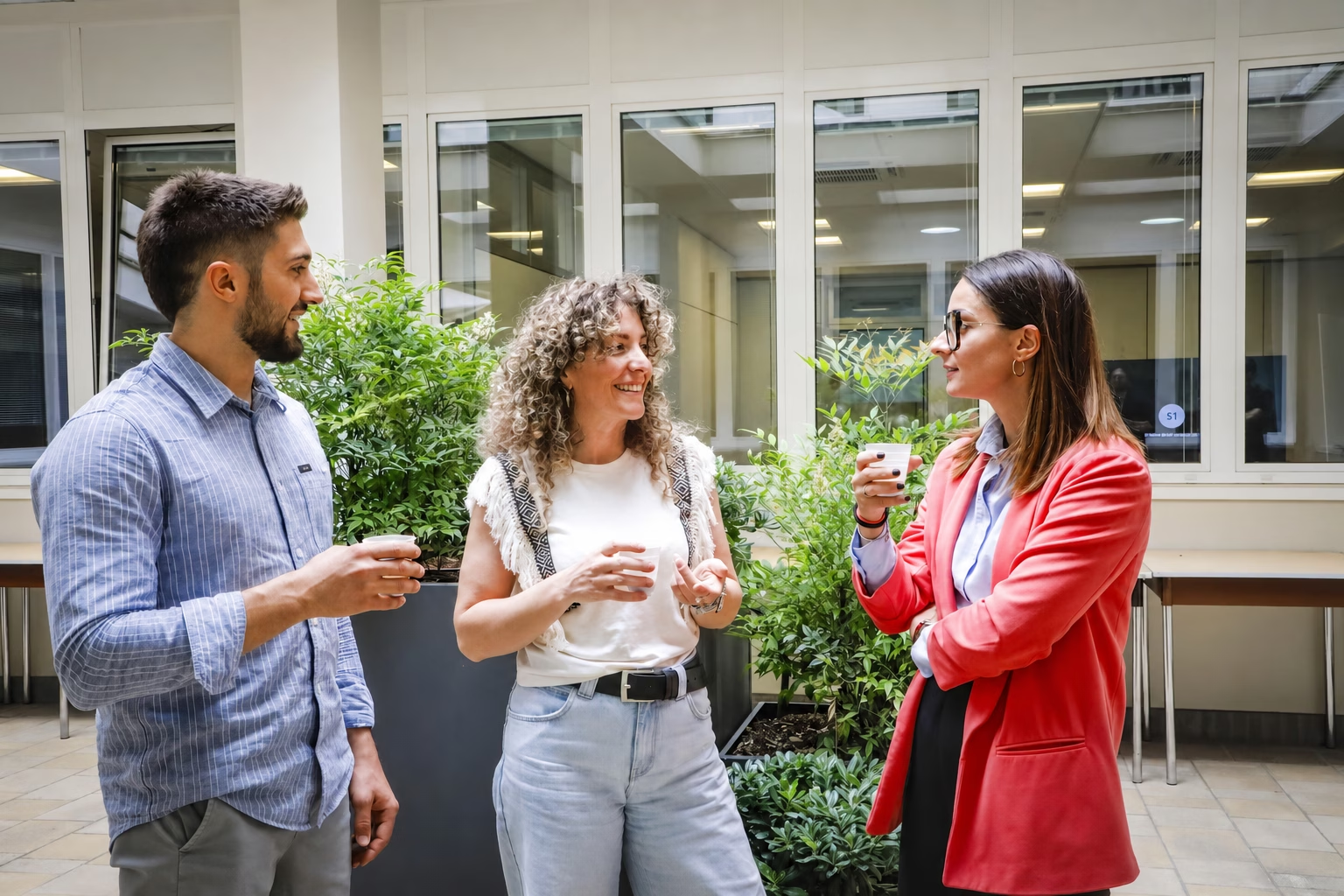
We talk about gender equality, women’s empowerment, inclusion and making the most of talent within companies by breaking down barriers and limits, thanks to a concrete commitment to building and sharing increasingly sustainable paths that protect people.
Paola Macchioni:
Hi Linda, it’s a pleasure to see you. What have we done? What has this company done together with you?
Linda Serra:
The company you represent has helped my company, because my company was founded ten years ago and it is thanks to companies like Camst and others that we have been able to keep going and build projects. Work Wide Women was founded precisely on the pillar of gender equality and women’s empowerment.
Paola Macchioni:
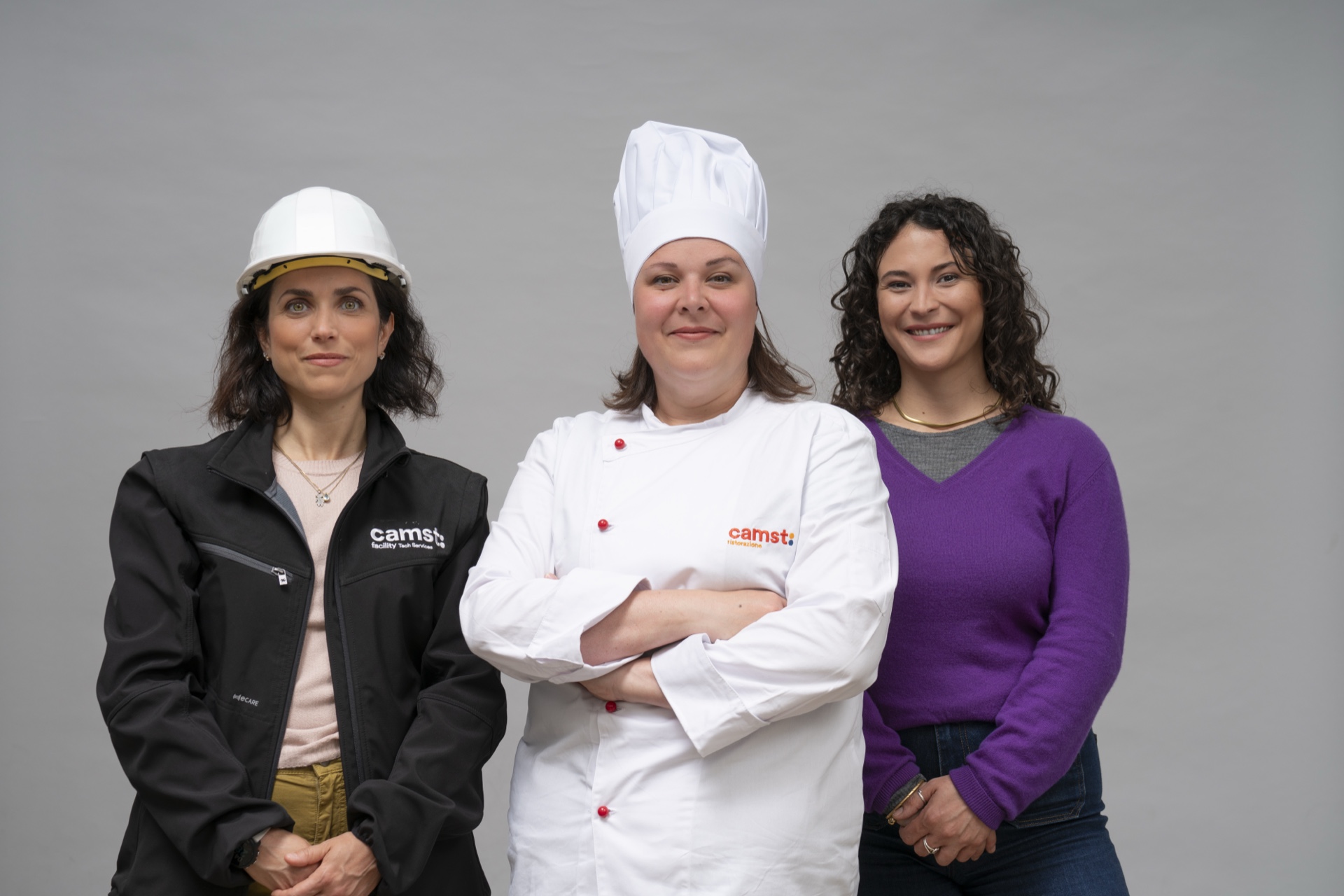
Indeed, I remember we talked about women’s leadership and our desire to have women not only in our operational workforce, where 85% are women, but also in different roles – managerial, positions of responsibility, leadership – drawing on the advantage of being women. And bear in mind how much Camst has done over the last ten years. Consider that until three years ago there was only one woman executive, now there are three of us, and this new perspective of having women who encourage different thinking and a different approach to the world of work is a change we are still pursuing.
Linda Serra:
In my view, Paola, the challenge now is to talk about generations. We are at a point in history when the generational gap is really at its peak, because the average age in Italy is 47. But we need new generations in companies and to make the most of those already there, the company’s heritage. So, in my view, the new challenge is this: we started together with gender, as we at Work With Women did in fact, and now generations are one of the drivers, aren’t they? What I think will help us is language. Language builds worlds, builds reality, and then helps people adopt an inclusive mindset.
Paola Macchioni:
Using seniority, expertise and skills, but then leaving the stage to young people, who build on the expertise of more mature people but develop a different language and lead a different generation. That is why the goal is to work together to try to achieve this result. To encourage people a bit like me, who think the world of work is the only world, to understand these young people who see work as one part of their lives. Because for them, living life is the most important thing.
Linda Serra:
As I always say, would anyone call Steve Jobs a baby boomer, or a boomer? So it always comes back to that: the attention we need to pay, starting from people, understanding the person in front of us and above all valuing them. Valuing diversity and so letting potential flourish. What helps us in this is working with different people and, above all, with people from different generations, as you said.
Paola Macchioni:
Fortunately, diversity also leads us to find ways for more mature people to become mentors for younger ones. And young people can be a source of energy for them, helping them see a different perspective for development.
Linda Serra:
Another challenge is training managers to lead intergenerational teams. Because as a manager I need to know that I can communicate with one person in one way and with another person in another way. Managing diversity is a new skill, in fact. So managing diversity, and therefore including people, is not just something for HR or personnel departments, but for everyone who works with people in a company.
Paola Macchioni:
Sorry, but help me understand a bit. How can we improve and work within the company to change our language, learning to listen on the one hand and finding ways to share and communicate differently on the other?
Linda Serra:
We borrowed from games.
Paola Macchioni:
Ah, an element of sharing.
Linda Serra:
Exactly, to engage people on topics that are not always exciting at first. For example, we deal with disability, we often deal with harassment, gender inequality and also discrimination, including homo-lesbo-transphobia. So games really help you get past that barrier and make you much more open to learning.
Paola Macchioni:
And to inclusion.
Linda Serra:
Yes, exactly. And then, by playing, by living a situation you are not actually living at that moment but simulating, it also gives you a chance to reflect later when you find yourself facing, say, discrimination or a lack of respect for someone – it may come back to mind, and this is feedback we have often received – so you relive that situation and perhaps also know how to act and how to deal with it.
Paola Macchioni:
So it is a game where diversity is certainly central, a diversity that opens up to all these topics – gender, but also age and disability – and so at last we can talk about topics that, when we deal with them from a legal standpoint, are just laws and conventions, such as ILO Convention 190, while presented this way they become part of us, and so we learn to include people and have a fully inclusive attitude. Thank you, thank you for the time you have given me. See you soon – we have been seeing each other often lately – and who knows, I’m sure that in the last four months of the year we will do something together, certainly on generations in dialogue. Thanks again.
Linda Serra:
Thank you. Bye.