
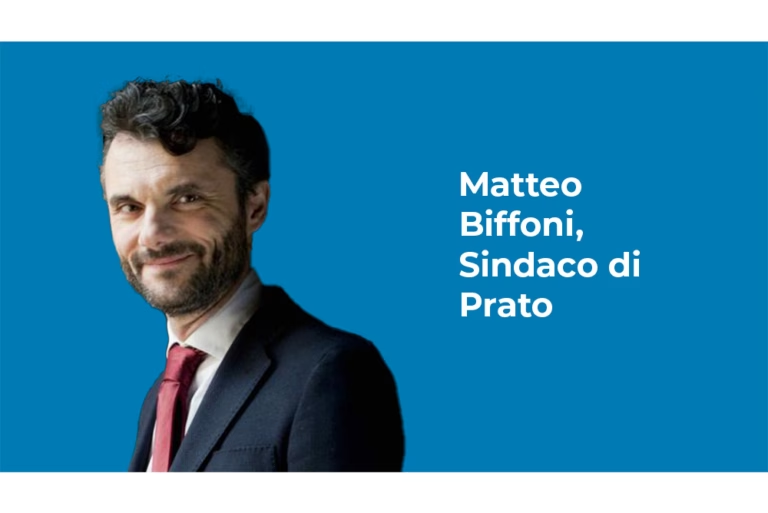
Involved in politics from a very young age, Matteo Biffoni has been Mayor of Prato since 2014. Under his administration the Tuscan city has always tried to anticipate the country’s economic and social changes. This is the context for the project to reduce single-use plastics in the municipality’s schools, which Biffoni talks about in this podcast. A real call to arms, built on the shared responsibility of everyone – institutions, families and the food service operator – in the fight against pollution of the planet.
Massimiliano Colletti:
It may seem a paradox, but sometimes huge problems such as humanity’s environmental impact on the Earth, waste disposal or pollution can be tackled with simple ideas that, while looking to the future, draw on the habits of our past.
Voiceover:
Voiceover: stories, good practices, sustainability. A Camst group podcast produced by Melting POD.
Massimiliano Colletti:
I’m Massimiliano Colletti, and today we’ll talk about how the Municipality of Prato has significantly improved the impact of its nursery and primary school canteens simply by eliminating single-use items.
Matteo Biffoni:
The idea of awareness of taste, the idea of giving children balanced meals, the idea of letting them try new tastes and flavours, the idea of using “the mayor’s water”, tap water, and the idea of using not plastic cutlery but cutlery brought from home, and the same for plates: these are all cultural foundations that we would like to pass on to
children.
Massimiliano Colletti:
That was Matteo Biffoni, a lawyer and Mayor of Prato since 2014. Since the 1980s the municipality has chosen not to use single-use plates and cutlery, a choice that from 2015 onwards took on a new meaning.
Matteo Biffoni:
The project in the Municipality of Prato dates back to the late 1980s; it is a long story about children using cutlery brought from home. It started partly for practical reasons and partly to save money; a truly cultural value
was then given to it, let’s say, from 2015, essentially following Expo, where the charter against food waste was presented and signed. It provided for a series of actions alongside those on food waste itself, and this of course also brought the opportunity to reduce the use of single-use plastic as much as possible, and with it the pollution it causes. So, coming from a long tradition that families and pupils had already taken on board, we were able to give this experience a value that is essentially cultural, let’s call it that, of protection against food waste understood as the waste produced by school canteens.
Massimiliano Colletti:
A small gesture which, if repeated every day by every child in every school, can have significant effects.
Matteo Biffoni:
Bear in mind that we serve – there are roughly eighty school buildings – over 10,000 meals a day. Think how many single-use kits are saved every day, every week, every month and every school year. This has been a real value, and we have tried to build on it by talking to families, who are told from the start of the year to put together the so-called “personal canteen kit”, in which children must have plastic plates and the ordinary cutlery they use at home. This message reaches families, nursery schools and primary schools straight away, as soon as children start their first year of school. From there it becomes a habit.
Massimiliano Colletti:
All clear, but in practice how does the children’s routine work?
Matteo Biffoni:
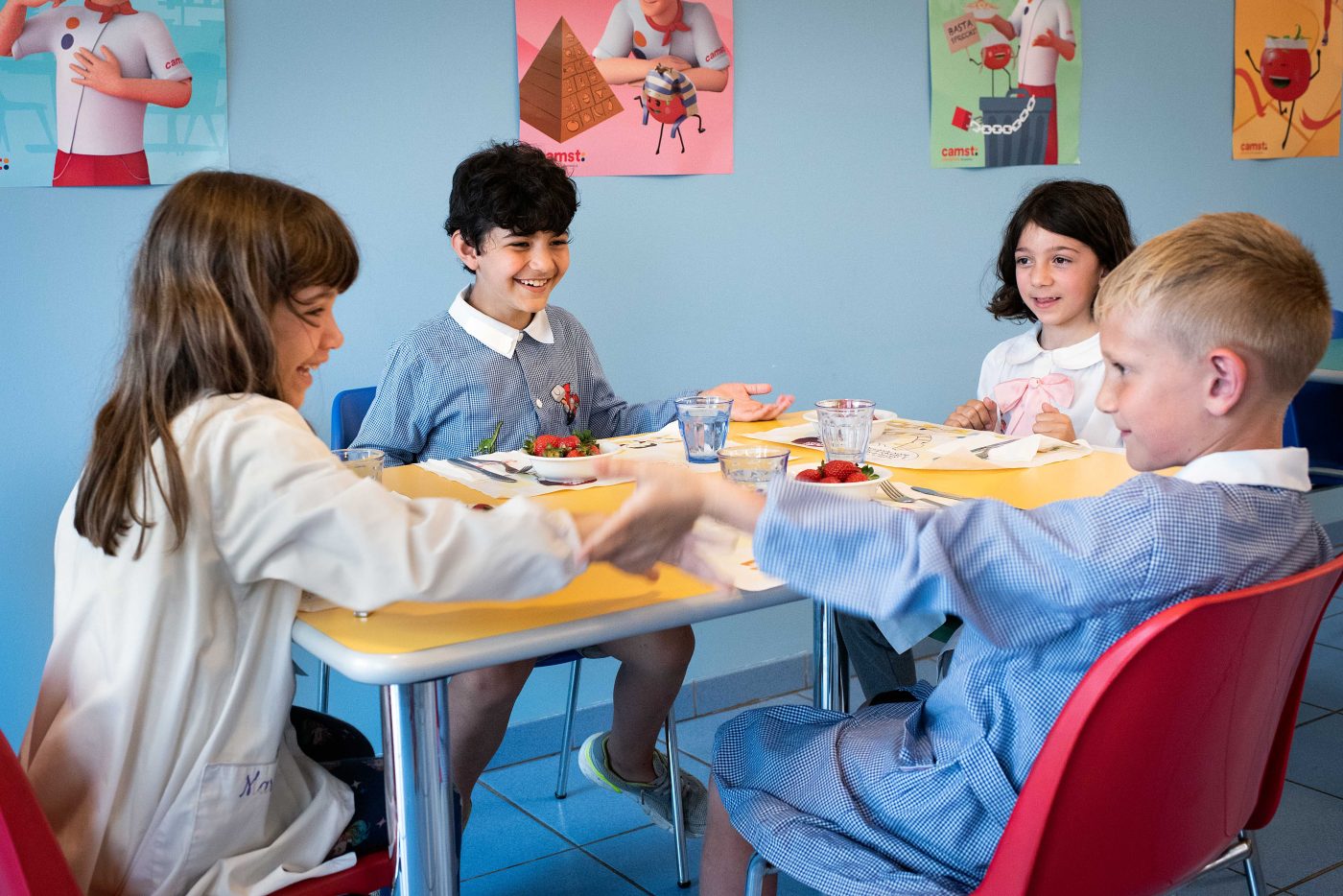
They bring a little bag in which they put a soup plate, a flat plate, cutlery and of course a plastic cup. When they arrive at the canteen they take this little bag with them into the dining room, set the table, and then of course the food is served by the canteen staff; they take everything back home and the next day it starts again.
Massimiliano Colletti:
And the families? Did the children’s families all react well to this choice?
Matteo Biffoni:
Well, at the beginning I was told that a few families argued “why don’t we switch to single-use kits like they do elsewhere, instead of me having to clean and wash everything”. But now this is completely behind us; I don’t think there is a single family in Prato who would question this practice, so there are no problems at all from this point of view – it is simply an established habit. The choice of having children bring cutlery and plates from home is part of a wider context, an all-round food culture ecosystem.
From this point of view, especially since Expo, we have built real work against food waste. For example, all children have “the mayor’s water”: plastic jugs supplied by our municipal water company, which the children fill at the start of the meal, and of course the water is not bought. There is work, as far as the law allows, on reusing and recovering food that has not been served.
Of course, as you know, food already served on plates must unfortunately be thrown away by law, but for what is left over there are pilot experiments in which it is reused as far as possible. There is a zero-kilometre culture, using – together with
Camst, which runs the canteens with us – local resources and local products, sourced as close as possible. Over time we are also working to refine the menus as much as possible and meet children’s tastes, while of course maintaining a rigorous approach to the nutritional value of the meal – proteins, carbohydrates, fats and so on – but trying to have as little food left over as possible, also by meeting children’s tastes and educating their taste and awareness. In short, we are trying to build many stories around the canteen, also giving them – the children, I mean – the chance to try foods they perhaps have fewer opportunities to eat at home, while keeping this rigorous approach. There is work inside the canteens that starts with using your own cutlery, but then extends to many other issues.
Massimiliano Colletti:
Well, that’s the end of this episode. That’s all from Massimiliano Colletti. Bye!
Voiceover:
You’ve been listening to Voiceover: stories, good practices, sustainability. A Camst group podcast produced by Melting POD.